VSD Repair in India
VSD or Ventricular Septal defect is a congenital heart defect. VSD repair surgery is required in these cases.
What is VSD Repair?
A VSD (Ventricular Septal Defect) is a hole in the wall that separates the ventricles or the lower chambers of the heart. A VSD may occur in isolation or along with other defects in the heart. What happens to the baby then depends on the VSD and the associated defects. This article deals with an isolated VSD.
It is a congenital heart defect that is present at birth. Over time, in some babies, this hole closes by itself. Once a VSD is closed (by itself or with surgery), the baby has a normal life like any other child.
If the VSD is small, a baby or child with it may have no significant problems except murmurs in the heart. However, in some babies and children, even a small VSD can cause damage to the structures of the heart surrounding it. But if the VSD is medium-sized or large, breast-fed babies may not put on weight like they should and get frequent chest infections.
Causes of VSD
A VSD is a developmental disorder present at birth. What exactly causes it is not very clear. There are certain factors affecting mothers during pregnancy that increase the risk of VSD and other heart defects in babies. Some of the known risk factors are a family history of heart defects, mother on certain medications in early pregnancy, diabetes in mother from early pregnancy, IVF pregnancy, anomaly scan showing a defect in any other organ system of the fetus (brain, gut, kidney, etc.).
How blood flows in a heart with a VSD
Let us look at know how the normal heart works. It will help you understand VSD better.
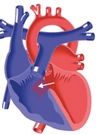
See figure 1 below (figure of the normal heart).

There are two chambers in our left and right heart. Right Atrium (RA) and Left Atrium(LA), which are the top 2 chambers, are the collecting chambers. The two bottom chambers, Right Ventricle (RV), and Left Ventricle(LV) are the pumping chambers.
The LV pumps pure blood to the whole body. As the body’s organs use the oxygen in the blood, it becomes impure. This impure blood then returns to the RA and is pumped by the RV to the lungs. When we breathe, the oxygen in our breath enters the blood and makes it pure again. The pure blood enters LA and is pumped out to the body by the LV.
Thus the heart supports two circuits. The left circuit pumps pure blood to the body, and the right circuit pumps impure blood to the lungs.
In a child with a VSD, the wall (SEPTUM) between the LV and the RV has a hole in it. So blood flows from the LV to the RV and then to the lungs. It means extra blood ends up going to the lungs.
The congested lungs get infected relatively easily. Also, the LA and LV become bigger, and pressure in the lung arteries also rises (pulmonary hypertension).
Types of VSDs
There are mainly three types of VSDs, depending on where in the septum they are located.
- Perimembranous VSD- It is the most common type. It can close on its own if small or medium-sized. Only a pediatric cardiac specialist can tell if it may close and if it is safe to wait for its spontaneous closure.
- Muscular VSD- This type is also very common. This type of defect has the best chance of closing on its own.
- Inlet Ventricular Septal Defect- this type is relatively rare. It does not close on its own and requires surgical closure.
VSDs can also be classified based on size. However, no matter what the size or the location, all babies/children with VSDs need to have regular follow up visits in a pediatric cardiac OPD.
Symptoms of VSD
Large-sized VSD: The affected baby will not have any issues for the first month of life. Slowly, the mother will notice that her baby tires out while breastfeeding. The weight of the baby will not rise like it is supposed to. The baby will get frequent cough/cold/chest infections. Mothers complain that a doctor’s visit is needed every week!
Small sized VSD: The affected baby is unlikely to have any symptoms from the VSD. However, even a small VSD can develop complications; hence regular follow up at the pediatric cardiac OPD is essential.
Moderate sized VSD: the affected baby has some symptoms of the large VSD but not of that severity.
Older children with a large uncorrected VSD and pulmonary hypertension will have tiredness with exertion. The nails may be curvy (clubbing) and have a bluish tinge.
Complications of VSD
Pulmonary hypertension: this means that the pressure in the lung arteries is high. It returns to normal once the VSD is closed, provided the VSD is closed at the correct time. If the VSD remains uncorrected for a long time, pulmonary hypertension may become permanent. IT has devastating consequences for the quality and quantity of life.
Bacterial Endocarditis: This is a rare complication seen in uncorrected VSD, no matter how big or small they may be. It is a potentially life-threatening infection of the inside lining of the heart.
Aortic valve prolapse (see figure 2 below):

When a VSD borders the aortic valve frame, the circular frame of the valve gets stretched and the valve leaflets suspended from it, don’t get enough support. Eventually, the valve leaks (also called aortic regurgitation), and this can become a bigger problem than the VSD itself.
Surgery involves closing the VSD. If the valve is too damaged, which is a rare condition, it needs to be repaired or replaced.
DCRV or double chamber right ventricle. It is a complication with tiny or small VSDs. Extra muscle bundles form in the RV and prevent the normal flow of blood out of the RV.
An affected child becomes tired while playing. Surgery involves closing the VSD and cutting the extra muscle bundles. This complication is entirely treatable.
Some defects close by itself without any treatment after a while (usually before two years of age). If the VSD is large and remains open, a repair surgery will be necessary to close the hole.
A VSD repair is either a cardiac catheterization procedure or an open-heart surgery. In cardiac catheterization, the surgeon will repair the hole with a patch by passing it through a large vein in the groin. Large VSDs will need open-heart surgery, to place the patch.
How is a VSD diagnosed?
Hearing an abnormal heart murmur while listening to the heart sounds with a stethoscope will raise a suspicion of a VSD. The pediatrician may also suspect a VSD if a baby gets tired with breastfeeding, fails to gain weight adequately or get repeated chest infections.
An Echocardiogram confirms the diagnosis- In this test, the doctor uses ultra-sound waves to assess the heart function as well as the blood flow. It helps to determine the size and location of the VSD and also other technical details that help the doctor decide the plan of action ahead.
Other tests include
- Pulse oximetry
- ECG
- Cardiac catheterization
VSD repair – When to do
Large VSD: A large VSD is usually closed by surgery when the baby is three months old. It is because, at three months, the risk of operation is low.
Some major heart defects are closed at birth, or within one month itself, of the doctor feels that it is not in the baby’s interest to wait any longer. On the other hand, waiting for more than three months to close a VSD may hamper a baby’s growth and make him/her susceptible to chest infections.
Small or moderate sized VSD: A child with such a VSD is kept under careful follow up by the pediatric cardiologist. The VSD needs to be closed if any complication develops.
VSD treatment
The standard treatment for a VSD is to close it surgically. Most dedicated pediatric cardiac centers can safely perform open heart surgery in this day and age.
The duration of the operation is around 3-4 hours. The baby will be in an ICCU for 2-3 days after surgery. The average stay in the hospital will be for 6-7 days.
Another way to close certain VSDs, especially muscular ones, is by a nonsurgical method. An interventional pediatric cardiologist carries out this procedure in a cardiac catheterization lab. An umbrella device is placed across the VSD to plug it.
The doctor will introduce the device through the groin vessel. There is no cut/suture in this procedure. The patient gets to go home the next day. Only certain kinds of VSDs can be closed by this method. The pediatric cardiologist can determine whether the VSD is suitable for device closure after a detailed echocardiogram.
A child with a successfully closed VSD can perform all routines of any other child, including performing well in academics, sports, etc. There are no restrictions on the child
Top Hospitals for VSD Repair
We partner with India's most respected accredited hospitals.


Frequently Asked Questions
The large VSD needs early closure. This surgery is best done at 3months of age. The tiny or small VSD if it not causing any symptoms in the child AND not causing any damage to the heart, can be kept under follow up (observation). Whether one can safely wait for closing a VSD is best determined by a pediatric cardiologist/surgeon.
The moderate sized VSD may be closed when it is felt that either the child is suffering (poor weight gain, frequent cough/cold episodes) or there is a damage to structures surrounding the VSD in the heart.
If a child develops infective endocarditis, it becomes an indication for closing the vsd no matter what the size of the VSD.
Yes, VSD is also a birth defect. The heart forms in the first 2 months of pregnancy and it is then, due to multi-factorial reasons, that heart defects happen
VSD surgery is generally a safe surgery with a minimum of risks and complications.
Safety of a particulay procedure should always be interpreted in context of if there is a safer option available to choose from. For a large VSD that needs closure in infancy, there is only one procedure available around the world and that is surgical closure. The benefits of surgical closure of a large vsd far outweigh the risks of the procedure.
There are always risks with any procedure. The risk may be minimal, but are never zero. A team that tells you that their result is always 100% successful, guaranteed, is far from the truth
The cost of VSD surgery in India will be in the range of 4500 to 6500 USD. Overseas patients will have to be in the country for about two to three weeks for the surgery
Get a Free Quote
We respond within 2 working hours.
Request Received!
A coordinator will contact you within 2 working hours.