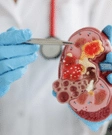
Kidney Cancer in India
Kidney cancer occurs when cells in one of the kidneys start growing uncontrollably and forms a tumor (lump)
What is Kidney Cancer?
Kidney cancer starts in your kidneys. You have one set of kidneys located behind your abdominal organs. Transitional cell carcinoma is the most common type of kidney that occurs in adults. A form of Kidney cancer, the Wilms’ tumor, occurs in young children. There are a couple of different forms of cancer that can affect your kidneys. People above 50 are more at risk. With early diagnosis and proper treatment, it is possible to cure kidney cancer.
What causes kidney cancer?
We do not know what causes this cancer. There are certain mutations in your DNA that increase the growth of these cancer cells. It makes the cells grow and multiply rapidly. These abnormal cells start to accumulate and form a tumor that can extend beyond the kidney. Some of these cells even break off and spread to distant parts of the body.
Risk factors of kidney cancer
Some of the main factors that increase your risk of kidney cancer are
- Smoking- This is by far, the most common reason
- Obesity - People who are obese or overweight are at a higher risk of having kidney cancer.
- Family history - If you have any family members with Kidney cancer, it increases your risk.
- High blood pressure - This can increase your risk of kidney cancer.
- Gender - Males tend to develop kidney cancer more often than females.
- Treatment for kidney failure - People who have chronic kidney failure have a higher risk of developing this cancer.
- Certain inherited disorders - People born with inherited disorders such as tuberous sclerosis complex have an increased risk of kidney cancer.
Types of kidney cancer
Renal cell carcinoma - This is the most common type, with more than 85% of the total cases. In this, cancer develops in your proximal renal tubules. These are part of the small tubes in the kidney that filter the blood, separate the waste, make urine, and carry it. There are thousands of such units in your kidney.
Transitional cell cancer- This accounts for about 10% of the cases. It occurs in your renal pelvis region. The renal pelvis is the region above the ureter and in the middle of the kidney. Renal pelvis collects your urine and then drains into the bladder.
Sarcoma - It usually develops in the soft tissues or surrounding fat in the kidney. This type is very rare.
Wilms’ Tumor - Wilms’ tumor or nephroblastoma is a rare type of kidney cancer affecting children. It typically occurs in kids at the age of 3, and it is uncommon after the age of 6. Children who have Wilms’ tumor may have constipation, fever, loss of appetite, and nausea or vomiting.
Girls tend to have this more than boys. About 1% of the total kidney cancers are this type.
Renal cell carcinoma(RCC) has many subtypes. Identifying the right subtype helps the doctor in having the right treatment plan for you. These subtypes are
- Clear cell RCC - It makes up almost 70% of the total RCC cases. The cancer cells will look very clear under the lens in this case.
- Papillary RCC - About 10% of the cases are this type.
- Chromophobe RCC - The cells are like clear cell but much larger. They make up about 5% of the total cases
Other rare types include collecting duct RCC, multilocular cystic RCC, and medullary carcinoma
General symptoms of kidney cancer
In its early stages, kidney cancer rarely causes any noticeable signs or symptoms. But, in the later stages, kidney cancer will show some signs. These include:
- Blood in your urine
- Persistent back pain or pain in the right below your ribs
- Abdominal pain
- Abdominal swelling
- Fatigue
- Anemia
- Sudden weight loss
- Lump in the abdomen
- Discomfort in your stomach or ribs
- Recurring fevers
- Loss of appetite
Diagnosis of kidney cancer
A general diagnosis of kidney cancer will include a physical exam. Your doctor will check for any swelling or lumps in your abdomen. In men, doctors will look for any enlargement or twisted veins in the scrotum. There are also specific tests that can help detect kidney cancer. These include:
- Blood chemistry tests - These will show you how well your kidney is functioning.
- Complete blood count - The kidneys produce red blood cells with the help of a hormone. A complete blood count will show if the red blood cell count is high or low, which will help the doctor understand your situation better.
- Urinalysis - This will allow your doctor to determine if there’s any blood present in the urine.
- Ultrasound of your abdomen and kidneys - This ultrasound can measure the shape and size of your kidneys. If there is a tumor, the ultrasound will show the size and consistency of it.
- Imaging tests - Imaging tests such as CT and MRI scans can show if cancer has spread to different organs.
Stages of kidney cancer
There are four stages of kidney cancer. These are:
- Stage I - The tumor can be up to 2 inches in diameter. It is present in the kidney and doesn’t spread anywhere.
- Stage II - In this stage, the tumor becomes larger, but it is still within the kidney.
- Stage III - The tumor spreads beyond the kidney and could have also spread to the nearby nymph lodes.
- Stage IV - Cancer has now spread outside the kidney. It will spread to the lymph nodes or any other distant parts of the body, such as the bones, liver, or lungs.
Treatment of kidney cancer
The main goal of kidney cancer treatment is to remove the tumor from the body through surgery. The main surgical options are
- Nephrectomy - This involves removing the kidney and any of the nearby tissues.
- Partial nephrectomy - This involves removing only a part of the kidney and a healthy tissue instead of the whole kidney.
- Immunotherapy - This involves using immunoreactive chemicals found in the body.
- Targeted drugs - These will block abnormal signals present in the kidney cancer cells. They help stop the formation of any new blood vessels that supply nutrients and oxygen to the cancer cells.
- Occasionally Metastatectomy or Stereotactic Radiotherapy in case of metastatic disease.
Top Hospitals for Kidney Cancer
We partner with India's most respected accredited hospitals.






Frequently Asked Questions
Most kidney cancers do not show symptoms or signs in the early stages. The presence of blood in urine is the most common first sign of the disease. It may be difficult to detect it with a naked eye and will need lab tests to identify. Pain in the lower back, night sweats, swelling of the ankles and legs are other symptoms
Kidney cancer is among the top ten cancers that affect men and women worldwide. Men are twice more likely to have it than women. Also, most of those who have it are above the age of fifty. Smoking, high blood pressure, obesity, excessive drinking, etc. can increase the risk of disease
Surgery is the most preferred treatment for kidney cancers. If the tumor is small, the surgeon will remove only that area by a surgery called a partial nephrectomy. If the cancer is large, a total nephrectomy to remove the affected kidney is advisable. If detected early, it is possible to cure early-stage kidney cancers through surgery
It depends on the stage of the disease and the type of treatment one gets. More than eighty percent of those with first-stage kidney cancer will go on to live for five or more years with treatment. For stage -2 cancers this is around seventy percent , and fifty percent for stage 3. Advanced-stage kidney cancers that have spread to other areas will need very intensive treatment to improve survival
Get a Free Quote
We respond within 2 working hours.
Request Received!
A coordinator will contact you within 2 working hours.