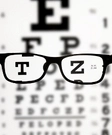
Myopia in India
Myopia or Short sightedness is a refractive error condition of the eye which causes distant objects to appear blurry
Get a Free Quote
Our coordinators respond within 2 working hours.
🔒 100% confidential. No spam, ever.
Your Journey with INDHEAL
Free Consultation
Share your medical reports. Our coordinators connect you with the right specialist within 2 working hours.
Travel to India
We arrange your visa letter, airport pickup, and accommodation near the hospital.
Treatment
Your procedure at a JCI or NABH accredited hospital with an internationally trained surgeon.
Recovery
Recuperate comfortably with dedicated nursing care and daily coordinator check-ins.
Follow-up
Return home with full medical records and ongoing remote follow-up from your care team.
Why Choose India for Myopia?
Save 60–80%
World-class treatment at a fraction of US, UK or Australian costs — without compromising on quality.
Expert Surgeons
Internationally trained specialists with thousands of successful procedures and global accreditations.
No Wait Times
Get treated within days of arrival. Full concierge support for visa, travel and accommodation.
Top Hospitals for Myopia
View all →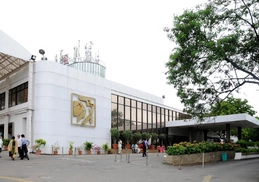

Frequently Asked Questions
Myopia is an inability to see distant objects clearly. Myopia is also called as short-sightedness or near-sightedness. Persons with short-sightedness can see nearby objects very clearly. They will not have any problems with reading or looking at a computer screen. But they will have problems with viewing objects at a distance. They will have difficulty in driving or watching television from a distance. While driving the road, signs will not be clearly visible until they are very close to it.
Myopia is known to affect almost twenty percent of the general population. In most of the cases the intensity is mild and is easily correctable using eyeglasses or contact lenses. In persons with pathologic myopia the condition can create severe visual disturbances. They will not be able to see for more than two or three feet even with glasses.
Myopia is considered a refractory error and occurs due to an abnormal curvature of the cornea. In myopic persons the cornea will be more elongated than normal. The cornea takes an oval shape rather than a round one in normal persons. This results in problems with focussing in the retina, the portion of the eye where the images are formed. The light rays tend to focus in front of the retina than the retina itself. This leads to a lack of clarity in vision while viewing distant objects.
There are various types of myopia classified according to their cause and degree of visual impairment. Some of them are-
• Simple Myopia-This is the most common type of myopia. The degree is less than four to six dioptres.
• Degenerative myopia-This type of myopia is also referred to as malignant, pathological or progressive myopia. This type of myopia progresses through one’s life causing significant visual impairment. The clarity of vision will be below the normal standards even after correction.
• Pseudo myopia- This is a condition where distant objects appear blurred due to a defect in the accommodation of the retina.
• Nocturnal myopia- This type of myopia makes it difficult to see in low light conditions especially in the night.
• Near work Induced Transient Myopia (NITM)-This type of myopia can occur in otherwise normal individuals. As the name suggests this is due to focusing on an object close to the eyes for longer periods of time. It occurs only for a very short period of time.
• Instrument Myopia-This is common among those who use magnifying instruments for longer periods of time as part of their work. Those who continuously peer into microscopes or other magnifying glasses are more at risk.
• Acquired Myopia-This occurs due to certain disease conditions and long-term use of certain medicines. This is more common in diabetics and those on sulphonamide therapy. Over exposure to oxygen or oxygen toxicity can also be a cause.
Myopia is also classified according to the age of onset. The major types are
• Congenital myopia-present at birth
• Youth onset myopia- occurs in teenage years
• School myopia- usually occurs in the school going years
• Early adult onset myopia- occurs between the ages of 20 to 40
• Late adult onset myopia -occurs after the age of 40
Symptoms of myopia:
In adult’s myopia symptoms include-
• Distant objects appear blurred
• Squinting of the eye to see clearly
• Increased strain on the eyes and resultant headache
• Difficulty in driving
In children the symptoms are-
• Presence of a persistent squint
• Sitting very close to the television while watching
• Excessive and unnecessary blinking of the eyes
• A tendency to rub the eyes very frequently
Currently thee is no cure for myopia, but there are various treatments available to correct the condition.
The treatments for myopia are:
Eyeglasses- Eyeglasses are the most common treatment for myopia correction. Eyeglasses of prescribed powers can help to provide better vision in a majority of the cases.
Contact lenses- Contact lenses for short-sightedness is best for those who want to avoid glasses. They also are not visible unless on a close examination of the eyes. The important factor to be considered while using a contact lens is their maintenance.
Orthokeratology- This treatment uses different sets of contact lenses to be placed over the cornea to correct its curvature. The sets are to be worn periodically for a specific period of time.
Natural cure for myopia- Various eye exercises are said to increase the accommodation power of the eye and thereby improve the myopic vision.
Eye surgery for myopia:
Refractive surgeries are performed to correct myopia. The aim of a refractive surgery is to correct the curvature of the cornea. Improving the curvature of cornea to its normal degree can help correct the refractive error. This helps the focus to shift backwards to the retina and thereby correcting myopia.
Refractive surgeries are minimally invasive procedures. Most types of refractive surgeries use lasers for correction. The surgeries are of short duration and usually get over within an hour. There are lesser postoperative complications as compared to invasive surgeries. The success rates of refractive surgeries are also on the higher side.
Some of the common refractive surgeries performed for myopia correction are described below.
Photorefractive keratectomy-
Also called as LASEK, the surgery uses lasers for ablation of the corneal tissues. This ablation helps to correct the curvature of the cornea leading to a correction of the problem.
Refractive surgery includes procedures which alter the corneal curvature of some structure of the eye or which add additional refractive means inside the eye. The procedure is suitable for correction of mild to moderate myopia. The patient may experience an amount of pain and discomfort during the recovery phase.
LASIK surgery-
This type of surgery also uses lasers for the ablation of corneal tissue. But unlike LASEK, Lasik surgery uses a surgical incision to raise a flap in the cornea. The underlying tissue is then ablated as necessary and the flap is closed. This tissue ablation improves the curvature of the cornea. The procedure is a painless one and provides faster recovery. The complications are mainly due to the corneal flap causing instability of the cornea.
Phakic- intra-ocular lens implantation-
This procedure does not try to modify the corneal curvature. Instead an intraocular lens is surgically inserted inside the eye and placed in front of eyes natural lens. This additional lens helps to eliminate the refractive error and correct myopia. Complications includes the development of glaucoma, cataracts etc later on.
Ayurvedic treatment for myopia
Ayurveda has highly effective treatment methods for correcting myopia and is especially useful when detected at early stages. There are few highly specialised eye Ayurvedic hospitals in India which provides treatment for myopia.
Ready to get started?
Free consultation. No commitment. Response within 2 working hours.
Get a Free Quote
We respond within 2 working hours.
Request Received!
A coordinator will contact you within 2 working hours.