Pulmonary valve stenosis in India
Pulmonary valve stenosis is a condition where there is a narrowing of the pulmonary valve.
What is Pulmonary valve stenosis?
Pulmonary valve stenosis is a condition where there is a narrowing of the pulmonary valve. It affects the proper flow of blood from the right ventricle to the pulmonary artery.
It is a defect of the heart that is present at birth and affects boys and girls at almost the same rate. The condition may occur alone or along with other heart defects. It accounts for nearly 10% of all birth defects of the heart.
Your baby will not have any symptoms if the obstruction is mild. In such situations, you will know about the problem only much later. If the problem is severe, symptoms will appear soon after birth or in infancy.
Cyanosis or bluish discoloration of the skin is the most common early symptom. Other common symptoms include difficulty in breathing, rapid heart rate, etc.
The exact reason as to why the condition occurs is not very clear. The heart valves develop in the first eight weeks of a baby's growth in the mother's womb. Problems during this time are likely to affect the proper growth of the heart.
It is possible to detect the problem with an echocardiogram. If the obstruction is mild and continues to be so, your child may not need any treatment. Your child will need a procedure if the symptoms are severe and continue to worsen.
Causes of pulmonary valve stenosis
Pulmonary valve stenosis is a developmental disorder present at birth. What exactly causes it is not very clear. There are certain factors affecting mothers during pregnancy that increase the risk of pulmonary stenosis and other heart defects in babies.
Some of the known risk factors are a family history of heart defects, mother on certain medications in early pregnancy, diabetes in mother from early pregnancy, IVF pregnancy, anomaly scan showing a defect in any other organ system of the fetus (brain, gut, kidney, etc.). Some syndromes have a higher incidence of pulmonary stenosis associated with them.
Heart valves usually develop in the first eight weeks of the development of a fetus.
How blood flows in a heart with pulmonary valve stenosis
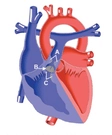
In order to understand Pulmonary stenosis better, it is important to know how the normal heart works. See figure 1 below (figure of the normal heart).

You can see two chambers on the left and right side of the heart. The top two chambers (RA and LA) are the collecting chambers, while the bottom two chambers (RV and LV) are pumping chambers. The LV pumps pure blood to the whole body. The body's organs use the oxygen in that blood and make the blood impure. The impure blood returns to the RA and is pumped by the RV to the lungs. When we breathe, the oxygen in our breath enters the blood and makes it pure again. The pure blood enters LA and is pumped out to the body by the LV.
Thus the heart supports two circuits. The left circuit pumps pure blood to the body, and the right circuit pumps impure blood to the lungs.
The left-sided circuit works at high pressure while the right-sided circuit operates at 1/5 the pressure.
In a child with severe pulmonary stenosis, the blood has a hard time exiting the RV. The valve guarding the exit point doesn't open properly.
It is easier to understand this by making an analogy with a door. A door has two parts: the rectangular door frame and the entries inside it. Think of the pulmonary valve as a round door frame with 2 or 3 doors inside it.
In pulmonary stenosis, the valve leaflets are thick or stuck to each other, or the valve annulus (door frame) is small. It makes the pressure in the RV a lot higher than it should be. It also causes the RV walls to become thicker. Rarely, the valve may be normal, but there will be obstructions above or below it.
Risk factors of pulmonary valve stenosis
As the problem occurs before your baby's birth, there are no clear risk factors. But a few of your habits or diseases that affect you in the first three months of pregnancy can increase your baby's risk.
Mothers who smoke are more likely to have babies with defects of the heart. Also, infections like German measles in the first three months of pregnancy can increase the risk. If your child has other heart defects at birth, the risk is more.
Symptoms of pulmonary valve stenosis
Those with mild stenosis will have no symptoms at all. If the obstruction to blood flow through the valve is severe, signs will be present at birth or soon after.
Others happen when the heart works harder to pump more blood into the lungs.
Some of the common symptoms your child might have are
- Shortness of breath
- Poor weight gain
- Being tired all the time
- Tendency to faint
- Chest pain
- Swelling of the abdomen
- Rapid heart rate
- Cyanosis- A bluish tint to the skin due to lower levels of oxygen in the blood. It occurs if your child has a hole in the wall that separates the lower chambers of the heart along with the valve problem.
- A heart murmur- When the doctor listens to your child's heart with the help of a stethoscope, he or she can hear an abnormal sound called a murmur.
Complications of pulmonary valve stenosis
Severe and untreated pulmonary stenosis will lead to various complications later in life. These include;
Problems with pumping of the heart- The right ventricle of the heart will have to work harder to pump blood through the valve. It leads to the thickening of the right side of the heart due to work overload. The result is that the heart becomes stiff and weak over time.
Higher-chance of infections - Those with valve problems is more prone to infections like infective endocarditis. This infection affects the membrane that surrounds the heart muscles.
Heart failure- Once the right ventricle loses its ability to pump enough blood through the valve, there will be congestion in the veins that empty into the heart. The common symptoms are swelling in the legs and abdomen, breathing problems, etc.
Diagnosis of pulmonary valve stenosis
Echocardiogram- This is the sonography of the heart with pictures obtained by placing the probe on the child's chest wall, in between rib spaces. It gives all details required to make a treatment plan. Only rarely are additional tests required. It is more likely to happen if there is an associated narrowing of the pulmonary arteries within the lungs. A CT scan helps in such cases.
Treatment of pulmonary valve stenosis
If your child has pure pulmonary stenosis, pulmonary balloon valvuloplasty is the option if the valve annulus (door frame) is normal in size. If the valve leaflets are so abnormal that not only do they not open properly, they don't close properly either (called valve leakage or regurgitation), then surgery would be better.
Balloon Valvuloplasty
It is a procedure to open up the valve in the cath lab. In this, the pediatric cardiologist will insert a thin, flexible tube through a blood vessel in the groin (femoral vein). At the tip of it, there will be a small balloon. They will then guide the tube towards the right ventricle (RV).
Once it reaches the pulmonary valve, the balloon gets inflated. It tears open the leaflets of the valve, thereby clearing up the pathway for the flow of blood out from the RV.
Your child will have an overnight stay in the hospital for the treatment. It has fewer risks, and recovery is usually fast. Deciding whether the risks are significant or not becomes easier to tackle if one keeps in mind the alternatives for treatment. For something like severe pulmonary valve stenosis, it will not get better on its own. It will not get better with medicines either. It will hurt the heart if it doesn't get treated.
Valve repair surgery
The surgeon will repair the valve under direct vision. The surgeon will suggest this only if ballooning is not suitable for the patient.
Prognosis
Mild cases will not show any symptoms and will not need any treatment. Moderate to severe cases will need treatment. There are very less chances of the valve posing further problems
Top Hospitals for Pulmonary valve stenosis
We partner with India's most respected accredited hospitals.






Frequently Asked Questions
If you have only a mild narrowing of the pulmonary valve, you will not have any symptoms. The symptoms usually occur only when the valve gets more narrow. The only sign of mild stenosis will be a ‘heart murmur’ which a doctor will be able to listen to with the help of a stethoscope
You will need treatment if the symptoms are severe. In babies with severe stenosis, the symptoms will usually start showing quite early. In such situations, it is best to treat it at the earliest. Usually the doctors will try to correct the problem through a minimally invasive procedure called balloon valvuloplasty
You can have a non-surgical procedure called balloon valvuloplasty to treat pulmonary stenosis. During this procedure, the doctor will insert a thin wire though a vein in the groin and guide it towards the heart. There will be a small balloon at the end of the wire which the cardiologist will inflate to open the leaflets of the valves . Complicated stenosis may need open- heart surgery to repair/ replace the valve
The most common treatments for pulmonary valve stenosis in India are balloon valvuloplasty and valve replacement surgery. The cost of balloon valvuloplasty in India is around 2,700- 3,000 USD
Get a Free Quote
We respond within 2 working hours.
Request Received!
A coordinator will contact you within 2 working hours.