Transposition of great arteries in India
TGA is a serious congenital heart disease affecting the flow of blood between the heart and the lungs
What is Transposition of great arteries?
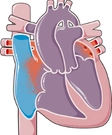
The arterial switch operation corrects a congenital heart disease called the Transposition of Great Arteries (TGA). TGA is a serious but rare conginetal heart disease(CHD). It happens when the attachment of the main blood vessels to the heart are not proper.
In a normal person, the pulmonary artery that carries impure blood to the lungs starts from the right lower chamber in the heart called the right ventricle.
Similarly, the aorta, which carries oxygen-rich blood, begins from the lower left chamber called the left ventricle. Also, the coronary arteries that supply oxygen-rich blood to heart muscle originate from the aorta.
In TGA, the aorta starts from the right ventricle. It supplies impure blood to the body, causing the skin to be blue in colour.
Further, the pulmonary artery starts from the left ventricle and provides oxygen-rich blood to the lungs. Thus, there will be a lack of oxygen in the blood.
The coronary arteries arise from the aorta, thus providing oxygen-poor blood to the heart muscle. All of this can lead to various issues unless corrected at the right time.
An arterial switch operation corrects this problem by dividing the aorta and pulmonary artery and reattaching them to the right chambers of the heart. The coronary arteries are detached from the old aorta and reattached to the new aorta.
If your baby has deep blue colour and if there is no ventricular septal defect (VSD), then surgery may be required at the earliest. If there is a VSD, then surgery can be deferred until 1-2 months of age.
The operation is done by surgeons who specialize in CHD in children. The duration of the surgery will be around 3 to 4 hours. Your baby will have to be in the hospital for about 10 to 12 days.
Diagnosis of Transposition of Great Arteries
'Fetal echocardiography' is a test performed during pregnancy. During this test, the doctor will look into how the baby's heart functions. In most cases, doctors can detect TGA at this time.
If not, the problem can be detected only after the birth of your baby. The most important sign will be that your baby will have a blue tinge, within hours of delivery. It is due to the circulation of oxygen-poor blood in the body. Your baby will also show symptoms like difficulty in breathing.
If any of these signs occur, your doctor will ask for an echocardiogram of your baby's heart. It will provide an accurate view of how your baby's heart is working. Doctors usually confirm the TGA ater this test.
Symptoms of Transposition of Great Arteries
The most common signs are
- Cyanosis- Skin will be blue in color especially lips, tongue and fingertips
- Difficulty in breathing
- Fast and shallow breathing
- Increased heart rate
- Poor feeding
All these make your baby unwell, if not treated at the earliest. Any delay can cause problems in the body. If the bluishness increases, especially when the baby is crying, it can even cause brain damage.
Treatment for a TGA
An arterial switch surgery is a surgical treatment for TGA. During an arterial switch surgery, the surgeon 'switches' or changes the attachment of the aorta and pulmonary artery.
An arterial switch surgery offers the best results when done in the first few months. But your baby will have to be in good health before the surgery. So, the doctors will try to stabilize the health of the baby before surgery, through the following steps.
1.Give medicines to keep the ductus-arteriosus open- A ductus-arteriosus is a natural channel that connects the pulmonary artery and aorta in all babies while in the mother's womb. This channel usually closes within 2 or 3 days of your baby's birth.
But if your baby has TGA, the doctors will keep this channel open for a few days with the help of medicines. This way, oxygen-rich blood from the pulmonary artery mixes with blood flowing through the aorta.
So, the aorta will be able to pump blood containing some oxygen. Prostaglandins (PGE1) is the most common medicine used for this purpose.
2. Increase the size of the foramen ovale in your baby's heart- Foramen ovale is a small opening in walls of the upper chambers of the baby's heart while in the womb. Through this opening, oxygen-rich blood from the left atrium mixes with oxygen-poor blood of the right atrium.
In a baby with TGA, this helps to increase the levels of oxygen in the blood. Balloon atrial septostomy (BAS) procedure done during cardiac catheterization increases the size of the foramen ovale. In this procedure, the doctor introduces a thin wire into the right atrium through a vein. It is to increase the size of the opening.
These two treatments will help oxygen-rich blood to flow through your baby's body and thus stabilize the baby before the switch operation.
Arterial switch surgery procedure
Arterial switch surgery is a type of open-heart surgery. The baby will be under general anesthesia. The surgeon opens the chest by cutting and spreading the bone in the midline. The baby's heart will be open during the surgery.
A Heart-lung machine performs the function of the heart and the lungs of the baby during this operation. The machine takes in the impure blood, mixes it with oxygen, and pumps it into the body, thus providing all the organs with oxygen-rich blood.
Once the baby is on the heart-lung machine support, the surgeon will stop the beating of the heart using medications. The aorta and pulmonary arteries are divided and sewn back to their usual place.
The surgery involves three steps
- Division of the aorta and pulmonary artery above their valves. The aorta will be detached from the right ventricle and attached to the left ventricle. The pulmonary artery is then attached to the right ventricle.
- The surgeon detaches coronary arteries that are attached to the pulmonary artery and then sews them to their rightful place in the aorta.
- Then, the surgeon will close any defects in the atrial or ventricular septal walls
After this, the heart takes over the blood circulation. The surgeon will then stop the heart-lung machine. The heart of your baby starts to beat again when oxygen-rich blood flows through the coronary arteries into the heart muscle.
Your baby will then have an echo and other tests to assess the function of the heart. Once this is in order, the doctor first closes the chest bone with fine steel wires and then closes the incision.
Preparation for an arterial switch surgery
Before the surgery, your baby will have a few medical tests. These include
- Blood tests
- Electrocardiogram
- Echocardiogram
- MRI
Once these tests are over, the doctors will check the baby to assess the overall health.
The baby may need blood during or after surgery. You, along with the hospital, will have to make proper arrangements for this.
You will have to be in the hospital with your baby 1 or 2 days before surgery. The mother will feed the baby, as suggested by the nursing staff. Usually, an IV line will be started the day before surgery to feed the baby.
Recovery after arterial switch surgery
Soon after surgery, the baby will be in a intensive care unit for few days. Your baby will be under breathing support here. You will also find that various wires and leads are attached to the baby's body. There is no need for panic seeing all this. These are there to check the baby's heart as well as other body functions.
There will be an IV tube, during the stay in the care unit, for feeding the baby. Gradually the baby will be taken off the ventilatory support. Over the next 3-4 days, the medicines will be gradually stopped.
The baby will be examined by the surgery team daily for the next few days. If things are alright, after a few days, you will be allowed to go home. The usual period of hospital stay will be in the range of 10 to 12.
The hospital will give you instructions about baby care and the dates and schedule of the follow-up visits. You will have to follow the instructions and follow-up very strictly.
Risks and complications of an arterial switch surgery
Most of the babies go on to have a life without any problem. Some babies will have to take medicines for some time to improve heart function.
A few will have minor complications like
- Feeding problems
- Vomiting
- Bruises at the IV line site
- Some major, but rare complications are
- Reactions to blood transfusions
- Injury to vocal cords during anesthesia
- Problems with heart rhythm and rate
- Bleeding
- Severe breathing problems
- Brain injury due to decreased oxygen supply
For a major surgery like this, that too performed in infants, the success rate of 98-99% is very remarkable indeed
Top Hospitals for Transposition of great arteries
We partner with India's most respected accredited hospitals.






Frequently Asked Questions
Arterial switch operation is the procedure to correct the Transposition of the Great Arteries(TGA)
TGA is a serious congenital heart disease. It happens when the blood vessels (pulmonary and artery veins and the aorta) are attached to the heart in the wrong mode. It results in problems with blood flow and circulation. The arterial switch operation corrects this transposition by reattaching the blood vessels in the correct order
The surgery for TGA, which is the arterial switch operation, takes about 3-4 hours
There will be tests for your baby before and after the surgery. So, your baby will have to be in the hospital for 10-12 days in total. You will have experienced pediatric cardiac surgeons do the operation
No, there is no evidence so far to prove that TGA is genetic
Studies so far have not been able to find any hereditary factors associated with TGA
TGA incidence is about 1 in 4000 births all around the world
It is a rare type of congenital heart disease. TGA is seen more in boys than girls
Get a Free Quote
We respond within 2 working hours.
Request Received!
A coordinator will contact you within 2 working hours.